上のタブを使って、今すぐにできるものや、日程調整して参加登録できるものがないかチェックしてみてください。
研究・調査への参加にはノートPCまたはデスクトップPCが必要です (スマートフォンやタブレットは使用できません)。特に指定がない限りは、ChromeまたはFirefoxのブラウザが必要となります。
Where is my Ball?
In this scheduled video chat with a researcher, your child will be assigned to a group and then listen to a short story, which will help us explore how a child's perception of their group membership plays a role in influencing the understanding of others' minds.
Learn More →
What language should they speak in?
In this scheduled Zoom call, your child will be introduced to different places with rules on language use and asked to judge whether it is okay or not okay if a person does not understand the language spoken around them
Which town has the formal rule?
In this study, your child will watch short videos of cute characters that live in different towns. In each story, towns aren't allowed to do this thing called "daxing". The towns are different in some ways, like by how big the towns are and how dangerous the towns are.
Learning About Physics with Real and Imagined Experiments
In a scheduled video call with a researcher, your child will answer questions about the weight of different objects and will take part in either a real or a thought (imagined) experiment designed to support children’s reasoning about weight.
Moral Values and Behaviors
In this scheduled Zoom study, your child will answer questions about their moral values and how they behave in everyday life. You (the parent/legal guardian) will complete an online questionnaire about parenting practices and your child’s behavior.
I-Spy in the Basket!
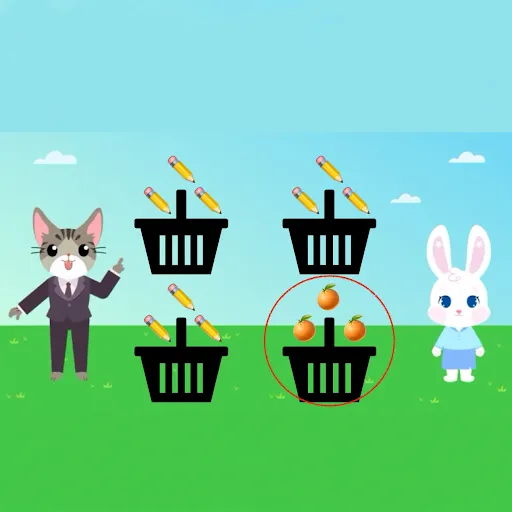
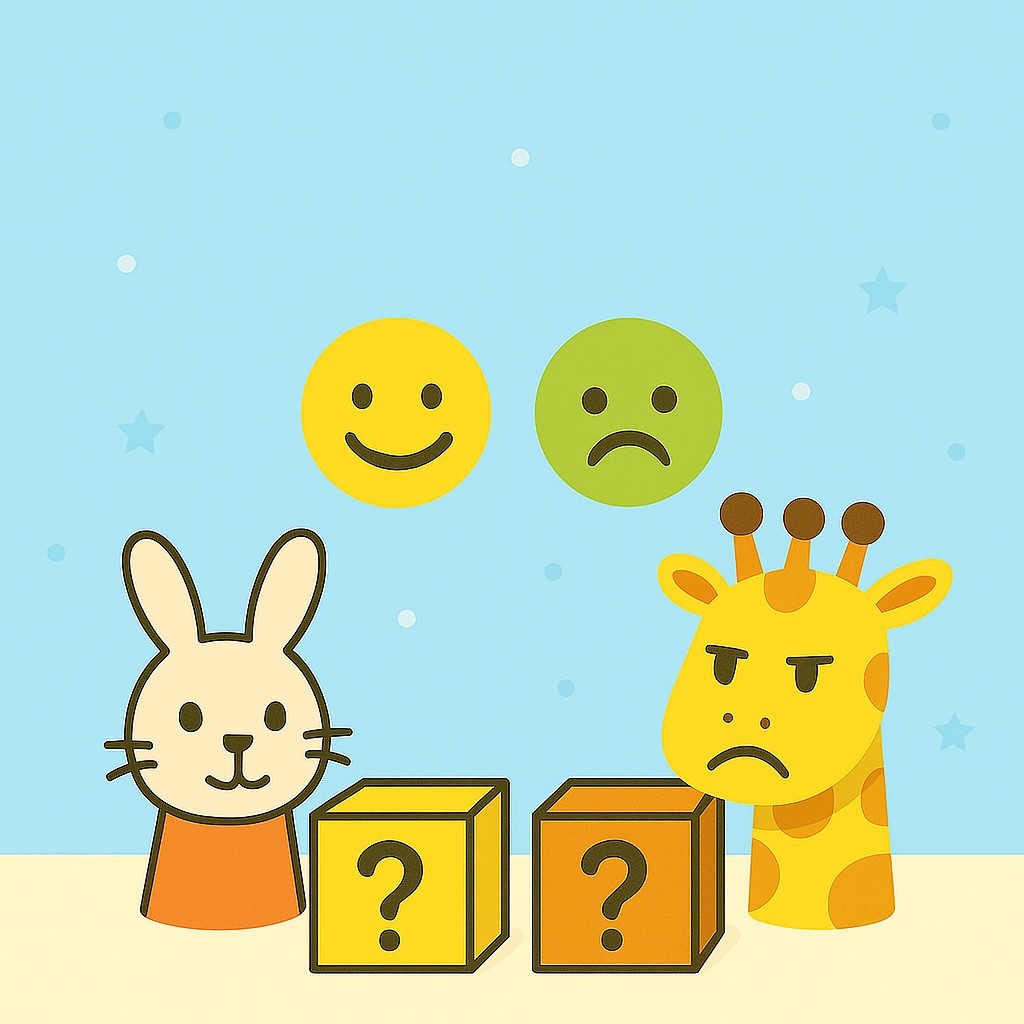
In the study, your child will interact with a live researcher and two friendly animal characters, Mr. Cat and Miss Bunny, on screen. Your child will see some images. Then Miss Bunny will describe one of them, and Mr. Cat will ask your child to evaluate whether Miss Bunny said it right.
Is that logical?
During this study, your child will hear some fictional stories about different animals and will be asked what they think!
How do coaches in sports movies make you feel?
In this study, your teen will watch an edited clip from a popular sports movie and answer some survey questions about their experience. We will learn whether teens' racial similarity to a coach affects their attitudes about themselves and others. Only Black or White teens are eligible.
Pain-related Stigma and Stress in Youth with Chronic Pain
Help researchers learn more about the experience of youth with chronic pain. Interested participants will be connected with a parent/caregiver survey to begin followed by several surveys to be completed by their child/adolescent (parent/caregiver can be present or not).
Let's Learn About Scientific Systems!
In this scheduled video chat with a researcher, your child will listen to examples of scientific systems while looking at pictures (e.g. how allergies work or how a toilet flushes). After learning about each system, the researcher will ask your child questions about how the system works!
Smart, cool, and nice? Evaluations of knowledge in different areas
In this scheduled video chat, a researcher will read stories or show videos to your child about some fictional characters talking to each other or to teachers. The researcher will ask your child questions to understand how children evaluate others' knowledge and abilities in the classroom.
Understanding Sentences With "With"
In this scheduled video chat with a researcher, your child will hear sentences and pick the picture that matches, and we will learn how children understand sentence meanings and adjust when the meaning changes.
“yes, and..” (how conjunctions shape kids’ answers)
In this scheduled video chat with a researcher, your child will watch two short stories about Froggy and Ducky as they go through a series of events, and we will learn how children answer “Do you know…?” questions to see whether they give yes/no answers or add more detail.
Social image among peers
In this scheduled video chat, a researcher will read stories or show videos to your child about some fictional characters experiencing a conflict. The researcher will ask your child questions to understand what children think about how conversations can lead to different social evaluations.
Your Face is the Clue!
We are interested in whether children can use facial expressions to communicate with social partners. In this activity, your child will learn about and interact with different puppets.
What will people do when they disagree?
In this activity, your child will watch two stories about two different groups of characters, the Wugs and the Flurps, who are building either a garden or a well. Then, they will be asked about what a character in each of the groups will do.
Watch Elmo and Grover talk to friends!
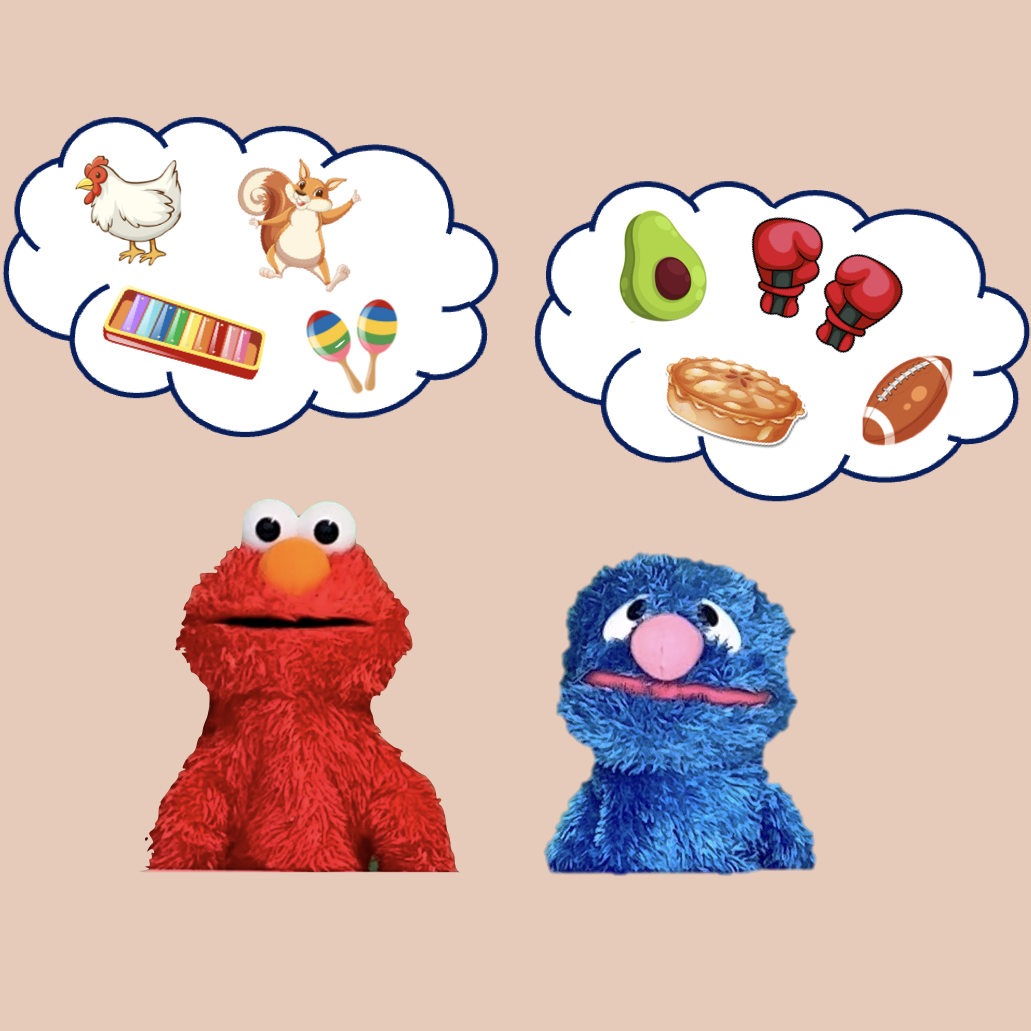
In this study, you and your child will watch two short videos of Elmo and Grover meeting friends. Your child will answer a few simple questions about what the characters are talking about and seeing. Please use a laptop/computer to participate in the study.
Let's learn how to dax!
How does under-representation contribute to children's self image? In this study, your child will learn a new activity and try out for a special club. Your participation will help us learn how representation shapes children's gender stereotypes and self-perception in elite groups.
Comparing Quantities While Talking
In this study, your child will make judgements about blue and orange rectangles by pointing. You will enter their response by clicking on their choice. In certain cases, they may be asked to complete a secondary task, such as saying the word "the" over and over while making their choices.
Help Charlie the Bee Find the Most Flowers
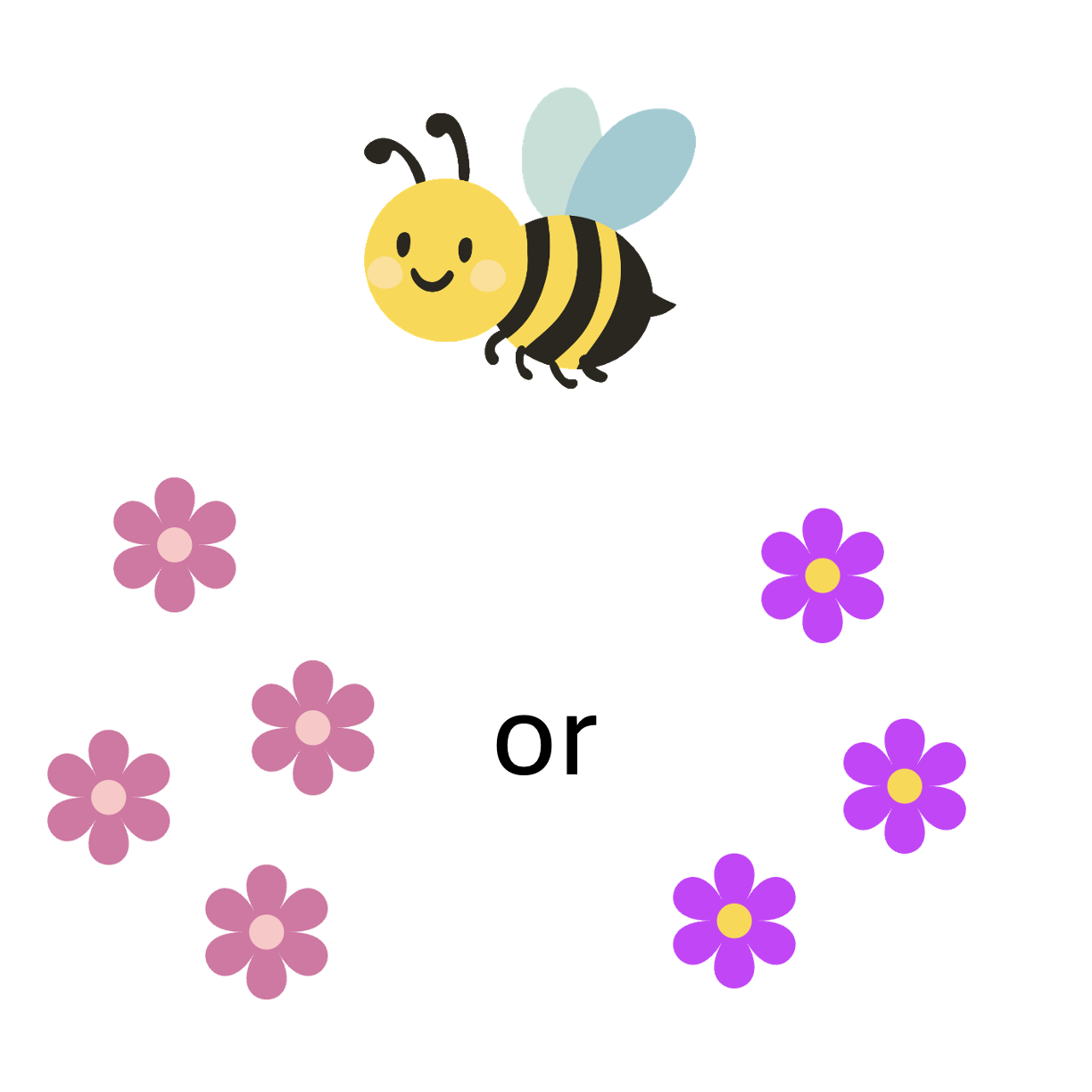
In this study, your child will need to help Charlie the bee determine which garden has more flowers.
How do children think about changing their beliefs?
Join us on Zoom to hear short stories and chat with a researcher! We are studying how children think about beliefs and actions, especially when kids learn new information about eating meat and decide whether or not to change their views.
Yummy or Yucky!
Your child will see some videos of someone giving feedback to their friend after trying their food. Then your child will be asked about the taste of the food and the person’s intentions. We will learn about how children make sense of different cues in conversation!
Attitudes towards Music
In this study your child will complete a questionnaire about their attitudes towards music.
What causes a feeling?
In this hour long study, your child will watch and rate short emotional videos and we will learn about how children learn about and understand emotional events.
Autism Development Study
Help us learn how language, storytelling, social understanding, and thinking skills support the development of children with and without autism through fun virtual activities and games!
Clean Up With Collin!
Help us learn about how the auditory environment affects preschool children! In this study, your child will play a sorting game while listening to background noise.
More Food or Better Food?
Help us learn about how children understand social relationships based on sharing in a in a one-time live video call with a researcher!
Children's beliefs about group inequality in a made-up world
Help us learn about how different descriptions of groups might help children better understand their social world.
Let's Learn a New Word about the Mind!
During the study, your child will hear a new word through a story about two bears, accompanied by picture illustrations. Then, we will show them pairs of videos and sentences and ask them to pick the ones related to the word.
But I want to do it!
Your child will hear two short stories about a boy and his mom and answer simple questions about what the characters did, wanted, and felt. Some questions will ask your child to answer aloud in English. This will help us learn how children think about everyday family situations.
Blue dots, yellow dots!
In this study, your child will learn a new activity and try out for a special club! Your child will answer some questions afterwards. Your participation will help us learn how children reason about what is worth their effort.
Whose fault was it? How could things have been different?
Your child will watch several short videos with a researcher in a video call. The videos involve stories in which a character either follows a norm or does not. Your child will then be asked several questions about the story, helping us learn more about how children reason over normality.
I see me, I see you: Recognizing emotions in others
This study takes about 90 minutes total, half for a survey you complete and half for a scheduled video chat with you, your child and a researcher. We will learn about how preschoolers with autism understand emotion as they see them on other people’s faces and what tools can help their understanding.
Let's Find The Stars!
In this study, your child will play a card game! We are interested in learning about how young children respond to surprising and unsurprising outcomes in this card game.
Let's Meet the Zarpies!
In this scheduled video call with a researcher, your child will be told a story about a group of characters, the Zarpies, and will be asked some questions about the story. We will learn about how children think about giving to the common good.
Why Do Children Play?
In this scheduled video chat with a researcher, your child will watch cartoons of other kids playing, and we will learn about early social development.
How many friends should the Wugs have?
In this study that requires your child to watch videos about different pairs of friends or best friends, they will answer some questions about what they think of character's friendships. They will also be asked if they would like to be like the characters.
Deciding which proportion is bigger!
In a scheduled zoom call, your child will be asked to compare proportions in the form of different colored shapes (like different kinds of rectangles).
Think or Tell: Thinking or Sharing Unusual Ideas
Schedule a Zoom meeting, read through a few short stories, and chat with a researcher! We are studying how children think about people who believe things that are not true. Specifically, whether they differentiate between believing something and sharing it with others.
How Parents Think, How Children Feel
In this study, you and your child will complete surveys about how you each interpret and respond to everyday situations, such as those involving family and friends. We are interested in how patterns of thinking relate to child well-being. Surveys take 60 mins for parents and 30 mins for children.
What do Bosses and Best Friends Say?
In this study, your child will act like a relationship detective. They will hear stories where people explain others' behavior, they will make guesses about who is closer and who is one another's boss, depending on how people explain behavior. We will learn about how they think about relationships.
What do you and your partner think about raising a child with autism?
In this study, co-parents of children with autism spectrum disorder will complete a survey examining perspectives (specifically attitudes), social support, and metal health, and we will learn about how parental agreement affects well-being.
Who gets to join the Reading Club?
In this study, your child will hear a story about different groups of students at a school. Your child will decide who gets to be in the exclusive Reading Club and answer some questions about the club and its students.
How Parents Think About Young Children
In this study, you will complete surveys about how you interpret and respond to everyday situations involving your child. We are interested in how patterns of thinking relate to child well-being. Surveys take 45-50 mins.
A peer’s playmate choices
In this video call with a researcher, your child will see photos of a group of children and be asked for their thoughts on the playmate choices made by one of the children.
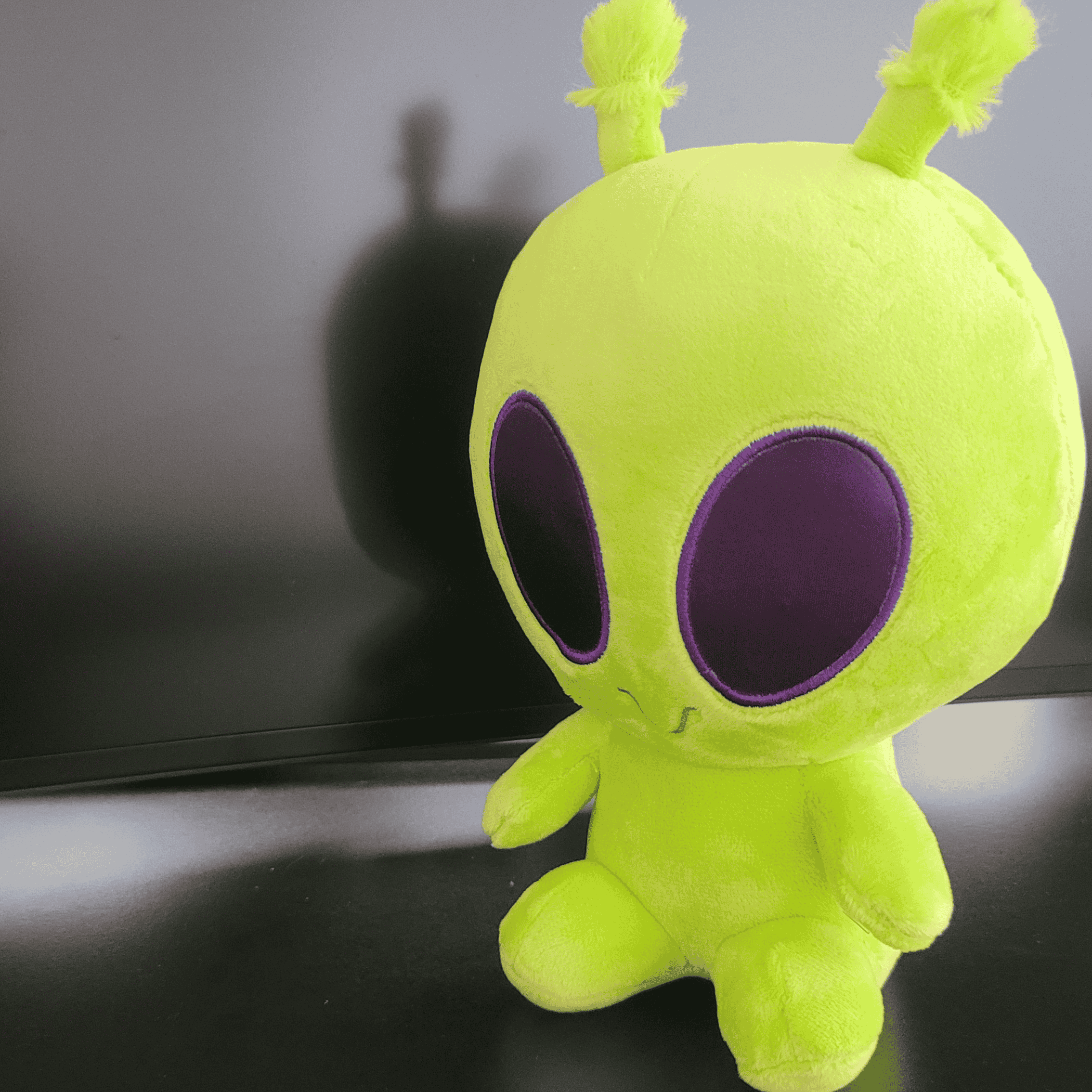
Space Adventures: Solve Critical Thinking Puzzles with Alien Friends
In this 40 minute scheduled video chat with a researcher, your child will embark on a space adventure in which they will play fun space-themed games! These structured interviews help us learn how children make decisions, and will help us build a tool to measure decision-making in children.
Guess feelings over time!
Your child will hear stories about other children waiting to hear some important news. The person will then receive either positive, negative, or uncertain news. Your child will be asked to rate how the child in each story might feel at different time points using the emotion scale provided.
Re-engagement Study for Puppies
This study is for you (the adult) and your dog! For about 9 months (starting at 3 or 4 months old, and until 12 months), you will video record yourselves as you complete a simple procedure and then share your video with our research team. This will help us learn about how dogs cooperate with people.
Social Groups and Learning Norms
In this live study with a researcher on Zoom, your child will see different stories about characters interacting with one another, and we will learn about children’s understanding of norms (what is right and wrong).
Power in Parent-Child Relationships
During this Zoom study, a researcher will introduce your child to parents and their kids who are disagreeing over what to have for dinner. We are curious if children consider kids' bossy demands as grounds for questioning the power in parent-child relationships.
When Is It Okay to Help and Share?
Help us learn what children think about everyday moral dilemmas involving helping and sharing! In a Zoom interview, a researcher will show your child stories about everyday opportunities to help and share, and then ask them what they think.
Connecting Beliefs and Behaviors
In this study, your child will hear about characters with different beliefs and will be asked questions about these characters, for example, how they might behave. We will learn how children's inferences based on others' beliefs develop.
One or More?
In this study you can start right now, your child will listen to stories that use singular and plural pronouns. Your child will choose which picture they think matches with the story that they hear. We are trying to learn how kids think about how singular and plural pronouns can be used.
How Do You Think They Feel?
Help us learn how children talk about having more than one emotion at a time live with a researcher! In this short video call, your child will hear several stories and will be asked to match emotion words to the stories with the help of some animal friends!
Which One Will They Get For School?
In a scheduled video call with a researcher, we explore how children begin to understand that objects are communicative tools. We want to understand whether children recognize that the things they bring or wear can tell others about their interests.
Helpful Friends
In this Zoom study, your child will watch different scenarios where characters help a friend. We are interested in learning what your child thinks about the helpfulness of the character's actions.
Music, Memory, and Listening
In this scheduled video chat with a researcher, your child will complete activities where they listen to words and sounds, repeat numbers, and compare short pieces of music, helping us learn how children use memory and listening skills.
Rusty Makes a Goal!
This study will take place on a scheduled video call on Zoom, live with a researcher. Your child will watch animated videos of a cartoon character Rusty who is trying his best at playing soccer, and answer simple questions about the soccer game.
Children's thinking about disagreement
In this study, that takes place on a video call live with a researcher, children will be asked questions about some cartoon characters and what they think about these characters' disagreements.
Activities at Summer Camp!
In this study, your child will watch videos about kids at a summer camp doing different activities. Then, your child will be asked short questions about their own thoughts and feelings related to the activities.
Play Cards With Jordan!
In this study, your child will hear a story about a child playing a memory card game, and then play the game themselves! We are interested in learning about how young children respond to surprising and unsurprising outcomes in this memory card game.
Where do people go on the ladder?
What do children think about people who speak different languages? In this study, your child will be introduced to people who hear different languages and hear them talk. Help us learn about children’s ideas about languages and accents.
How do these toys work?
In this study, your child will see pictures of toys and choose different people to teach how the toys work, and we will learn about who children like to learn from.
Household Labor and the Future
This study consists of a live video chat and survey and may require a second visit. The study is for you, another co-parent you live with (if applicable), and your child. You and your child will be asked questions about chores, careers, and media your child is exposed to.
How do children understand sentences?
In this video chat, we are studying how children understand sentences that may have multiple meanings by playing a picture-matching game with a puppet.
Can you choose the bear she wants?
In this study, your child will look at arrays of objects and try to decide which one a character wants from what they say. We will learn how children use emphasis and adjectives to figure out meaning.
Folklore Stories and Gender Stereotypes
Help us learn how shared reading shapes children’s ideas about gender roles. Today, your child will answer questions about toys and activities for boys and girls (10 minutes). Next week, you’ll read a folktale with your child, they will answer questions, and you will complete a survey (40 minutes).
Why Do Zarpies Do That?
In this study, your child will meet the Zarpies: cartoon characters who live far away and do unusual things. Your child hears a short clip about each one, then answers questions about what they think by clicking picture buttons or responding aloud.
Heroes and Villains: Moral Judgments of Characters Loss
During a video call, your child will share their views on heroes and villains. This study explores how a character's morality influences children’s understanding of death and characters' emotional reactions to loss.
Thinking About "What-If"
In this study, your child will watch animated stories and play fun thinking games to help us learn how kids reason about events and imagine what could have been.
Let’s Draw and Play!
In this scheduled video call, your child will engage in various drawing activities with a researcher. Help us learn how praise influences children’s persistence and challenge-taking behavior!
Thinking about actions and inactions
Your child will watch several videos with a researcher in a video call. The videos involve characters doing actions (e.g., jumping into a pool) or inactions. Your child will answer questions about the story, helping us learn about the possibilities children can think about.
Tell us about your health!
In this study that includes a short survey and which will be followed with a second study session, you will answer a few health-related and demographic questions about your child/children, and we will learn more about memory development.
Para quem o menino está apontando?
Seu filho ou filha verá fotos de personagens de desenhos animados interagindo entre si e aprenderemos sobre a interpretação que as crianças fazem dessas interações.
Let’s decorate easter eggs!
In this scheduled video chat with a researcher, your child will learn about two machines in an Easter egg decorating factory and predict what eggs will look like after passing through both. This helps us understand when children can reason about two-step operations.
How are these people feeling?
This study involves 5 scheduled sessions over the year, each session 2 months apart. Each session During each session, your child will be asked questions about how they have been feeling and thinking recently, and then they will answer some questions about how other people are feeling.
How Do Kids With Autism See Faces?
Your child will see two faces on the screen. The top parts of the faces will either be the same or different. Your child will be asked to decide whether the top halves of the faces are the same or different. This study will help us better understand the development of face perception in kids.
Find the Caregiver!
In this study, your child will hear stories about someone who needs help, select which of two characters is more likely to respond, and answer questions about love and who is in charge. Help us learn how children understand caregiving relationships.
Why did the Mom ask what was on the roof?
The study is about how children learn to answer questions - like why, where, when, how - after a story. In this study your child will see some short pictured stories, and will be encouraged to speak the answer to a question at the end of some of them.
Commitment Study for Adult Dogs
This study is for you (adult/parent) and your dog! In this study, you will video record yourselves as you complete a procedure on 4 different days and then share your videos with our research team. This will help us learn about whether dogs understand commitments like humans do.
Discover the rule!
In this study, your child will play a music box game where some quantities make a box play music and others don't. We are interested in what kind of quantitative information children pay attention to when figuring out what will make the box play music!
Children's Word Learning Strategies
Which strategy is the most effective to learn words in a second language? To help us answer this question, please join us for a scheduled 30-minute Google Meets call where your child will learn basic words in Spanish and play word games.
Caregiver-Child Conversations about Faces
In a scheduled video call with a researcher, you and your child will talk together about people shown in images. Caregivers will be asked to complete a survey after the conversation portion of the activity. This will help us learn about how families evaluate images together.
Verb Variation
We are seeking 4, 5, and 6-year-old participants! In this study, the child will watch short child-friendly videos and answer questions about what they hear!
Tell Me Why!
We are interested in understanding how children answer questions about the natural world when they do not have access to a model
Write with AI chatbot
In this study, your child will share their views on public topics, write a short essay with an AI chatbot, and answer questions about their previous experiences with AI tools.
Children's Reasoning about Diversity
In this scheduled video call with a researcher, your child will learn about diverse fictional characters, and help us learn how children reason about diversity in their environment.
Children’s experiences with AD(H)D medication
This study is for children who take AD(H)D medication such as Ritalin or Concerta. Your child will fill out questions about their experiences after starting their medication.
Who is correct, the doctor or the chatbot?
In this scheduled video call with a researcher, your child will answer questions about whether they think AI chatbots, doctors, and grownups can correctly answer health questions and identify when each of these kinds of information sources make mistakes.
Feminist Parenting of Young Children
Feminist parents will fill out an online survey about teaching their child about gender. Some participants will be mailed a book to read to their child, audio-recording themselves doing so.
The secret language of penguins
In this study, your child will watch a few short videos of penguins speaking a made-up language, repeat, type and read words, and help us learn about children's ability to acquire new words.
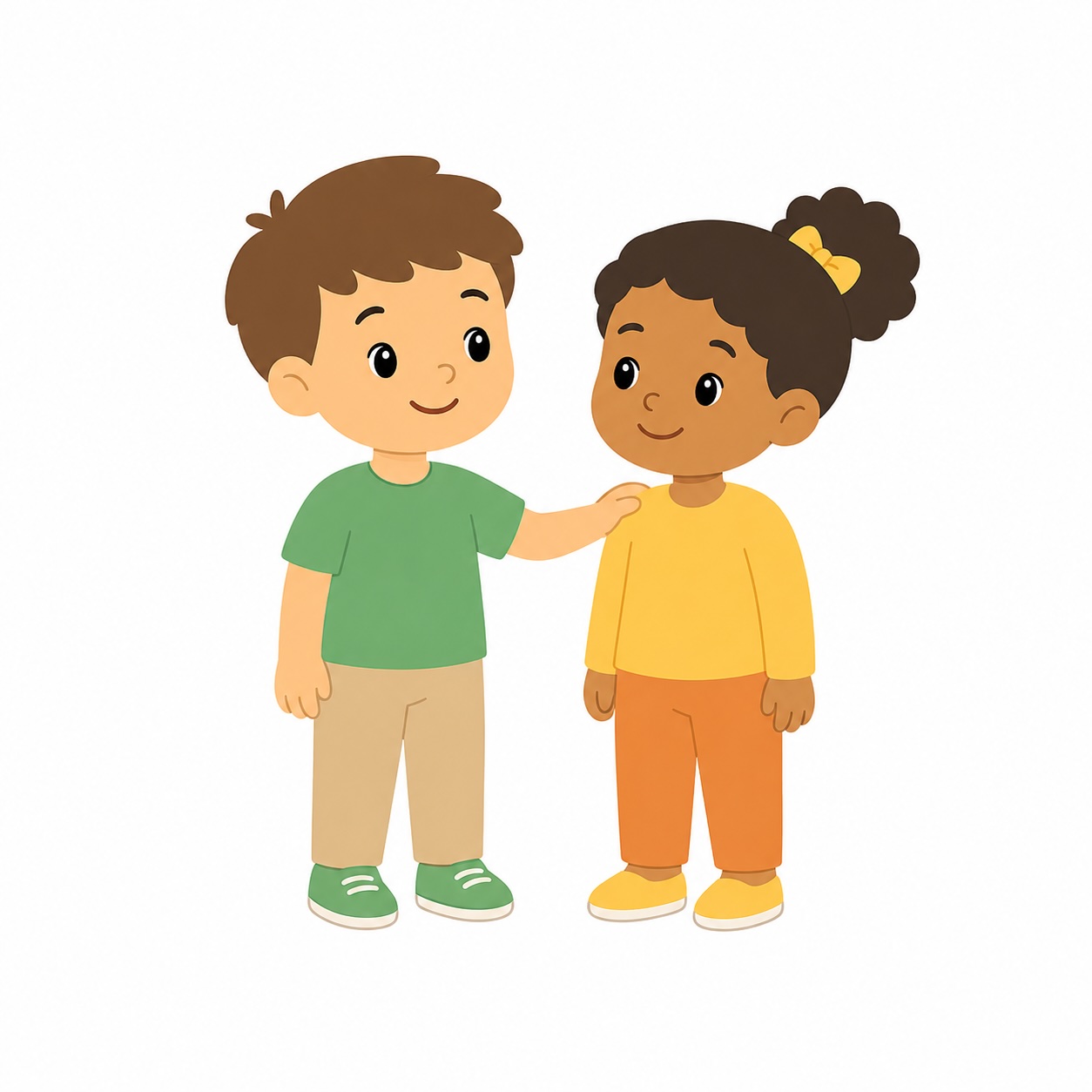
What is this action?
In this scheduled video chat with a researcher, your child will be shown videos of a boy and a girl having different interactions (e.g., patting on the arm) and asked simple questions about what they see, to help us learn about how children define common actions (e.g., patting).
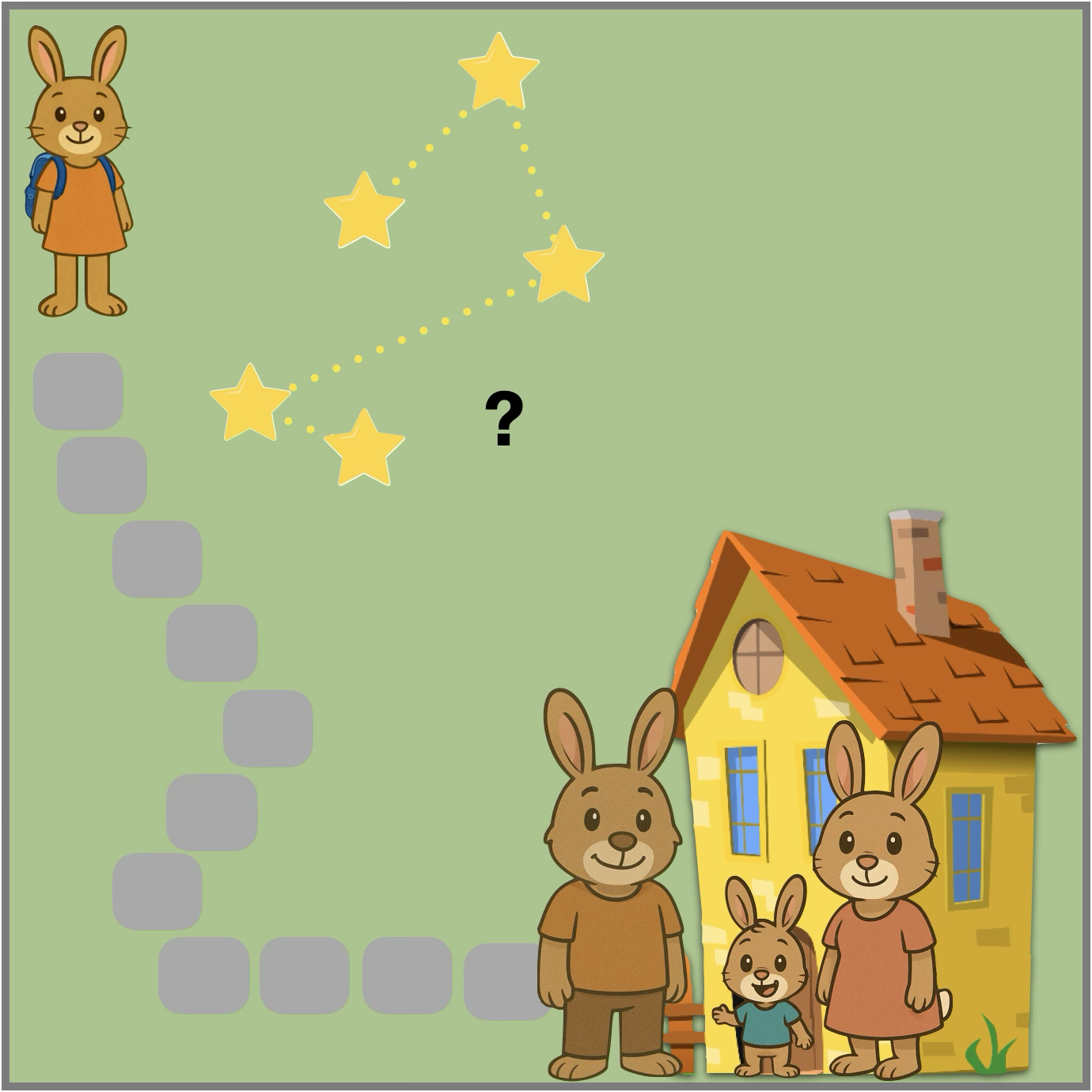
Guess the Pattern to Get Bunny Home!
Your child will make guesses on where they think a star will go next! It is preferred that your child uses a tablet for the game while your session is recorded through your laptop on CHS, but this study can be done on a laptop only if that is not possible.
Is There Enough for Everyone?
Your child will hear stories about people and the things that matter in their lives, like love, money, healthy food, and good jobs. We will learn how children think about whether there is enough of these things for everyone to have what they want or need.
Who would you say "good job" to?
In this asynchronous study, your child will hear short stories about characters playing sports and answer questions about which characters they would say "good job" to. We will learn what actions and outcomes children view as praiseworthy!
Which Friend Said It Best?
In this live study, your child will watch a video on a Zoom call with one of our research assistants. We will ask them questions to see if they can identify which of two sentences is grammatically correct (“Who said it best?”).
Is My Friend Happy?
In this scheduled video chat with a researcher, your child will listen to some scenarios and answer some questions about what factors influence children’s understanding of happiness, specifically examining how children perceive the impact of social material possessions on happiness.
Do kids work harder with someone who agrees with their caregiver?
This study will take place on a video call, live with a researcher. We're interested in seeing how kids view the connection between a new character and their caregiver, and how they might use that to answer other questions.
Which Way Should We Go?
In this scheduled video call with a researcher, your child will play a short computer game similar to Pac-Man, and we will learn how children set goals and collaborate with others!
Wheel of Fortune
In our study, your child will play a spinning wheel game and answer questions that help us learn how children respond to effort and control.
How do kids engage with moral stories?
Help us learn how kids think about stories where a character does something mean! In this asynchronous study, your child will be asked to engage with different stories and engage in creative thinking.
The costs of social actions
In this scheduled video chat, a researcher will read to your child about some fictional characters experiencing a conflict. The researcher will ask your child questions to understand what children think about the ups and downs of social relationships.
For Korean and English Bilingual Children: Words in Space
In this scheduled video chat with a researcher, your child will watch short 3D animated videos of objects being placed in different ways and choose which of two new videos is most similar. We are studying how children use language to group and understand spatial scenes.
Road Trip with Friends! 4.0
In this study, your child will go on a virtual road trip and help some friends along the way! This is a new version of "Road Trip with Friends" - if eligible, your child can participate even if you've done some previous version of this study (you will see child eligibility on the screen)!
Is this tree ZORPY?
Help us learn about how children learn the meanings of adjectives! In this study, your child will watch videos of short conversations where people use made-up words. Your child will then guess what some of the words mean.
Toy Showing Study for Adult Dogs
This study is for two adults and your dog you both live with! In this study, you will video record yourselves as you complete a procedure on 4 different days and then share your videos with our research team. This will help us learn about how dogs communicate with people.
Getting Stuck and Unstuck When Solving Puzzles
In this anonymous study you can do on your own time, you will read stories about characters solving puzzles to help us learn how children expect characters to act when they get stuck.
Thinking about preferences and rules
In this scheduled video chat with a researcher, your child will watch several short videos with us involving a character's thoughts, and answer questions about the videos. This will help us understand how children think about mental states in the context of imaginary events.
GARDEN Library Grand Opening 2 (Finale)!
For families who have completed the first eight Project GARDEN studies and are ready to start participating in GARDEN Phase 2. This is a short video introducing the new Phase 2 story with Fen! Fen needs your child's help getting the library ready for visitors!
Children’s interest in other people
In this video call with a researcher, your child will be asked to express their interest in different people shown in pictures.
Learning About Novel Animals
In this live video call with a researcher, your child will see and hear information about pairs of novel animals. After seeing each pair of animals, your child will be asked to answer some questions about what they have learned about the animals.
For Children in the USA only: Fairy Tales!
Let’s Talk about Fairy Tales, your Creativity and Imagination! For children who live in California, New York or Texas. On a live video-call, you will tell us what you think about fairy tales to help science learn about imagination, creativity and personality.
Who do You Want to Learn New Words From?
In this study, your child will learn some new words, but have the choice to learn from either a child or an adult. Help us learn how children decide who to learn from when discovering new toys and tools!
Which Food Do They Like More?
Help us learn about how children understand social relationships based on sharing in a live video call with a researcher!
Confidence in the classroom
In this scheduled video chat with a researcher, your child will hear from a peer about their own abilities, and then answer a series of math and reading questions!
Sharing and Caring
During this Zoom study, a researcher will read your child a few short stories about sharing. We ask if children are more likely to expect others to share with friends, and if how much someone values their possessions matters in these decisions.
What Do You Know About Emotions in Others?
Help us learn how children develop empathy and understand feelings in a live video call! In this study, your child will hear short stories and answer questions about how characters feel. This helps us understand how the way we talk about emotions helps children connect with others.
GARDEN Library Grand Opening 1!
Conversations on Household Labor Between Children and Their Parents
This study is for you and your child. In this scheduled Zoom call, you and your child will be asked to discuss two short videos, and your child will then be asked to divide chores between two hypothetical parents.
What Do You Think the Teacher Means?
In this study, your child will listen to short stories about a teacher making comments to students in a classroom and answer questions about what they think the characters are like. Help us learn how children use everyday language to make judgments about a person's character and abilities!
Who's Keeping Track?
Your child will hear stories about two characters who repeat an action that was previously done to them, but express their intention in different ways. After each story, they’ll be asked questions about their judgments of each character to learn about how children judge expressions of reciprocity.
Lets be Little Judges!
Your child will listen to eight illustrated stories about two characters and their cookies, then use bars and move cookies to show what they think. Help us learn how children think about fault, carelessness, and responsibility. Complete at home on your own device.
Talk with your child about sentences describing people and other things in the world
In this study, you and your child will discuss agreement with sentences about people and other kinds of things in the world (e.g., plants), and you will explain your answers. Children will group items and evaluate stories. The study involves talking with your child and lasts about 25 to 30 minutes.
Which one of these is like this one?
This study takes place over Zoom with a researcher and lasts about 30 to 45 minutes. Your child will see pictures and play a matching game, deciding which things go together and why. Parents will complete brief surveys, including vocabulary checklists about their child’s word knowledge.
Ready, Set, Think!
In this scheduled video chat with a researcher, your child will complete activities where they respond to pictures and follow simple rules or instructions, helping us learn how children use memory and attention in everyday situations.
Can you remember shapes?
In this study, your child will be shown a video of a stream of shapes, and we will ask your child questions based on what they remember from the video. This is to help us explore the learning process of children.
Light up the Box!
In this scheduled video chat with a researcher, your child will get to explore a magical “light-up machine” by placing different objects on it to see what happens. Their job is to figure out which object (or combination of objects) makes the machine turn on.
Did Bobby or Sophia break the mirror?
In this study, your child will view two digital 'storybooks' featuring two stories about Suzy, Andy, Sophia, and Bobby. We are interested in how children use causal verbs in language and how they think about causation and responsibility.
What can you remember? Memory of Numbers, Pictures, and Stories
In this study, your child will be asked to recall the details of stories!
Solve Patterns to Help Bunny Get Home
Would you ask a Chatbot for Parenting Advice?
Complete a survey about your views on using AI for parenting advice, with the option to review a parenting guide and share feedback over Zoom.
Children’s and Teens’ Views on Bioethical Decisions
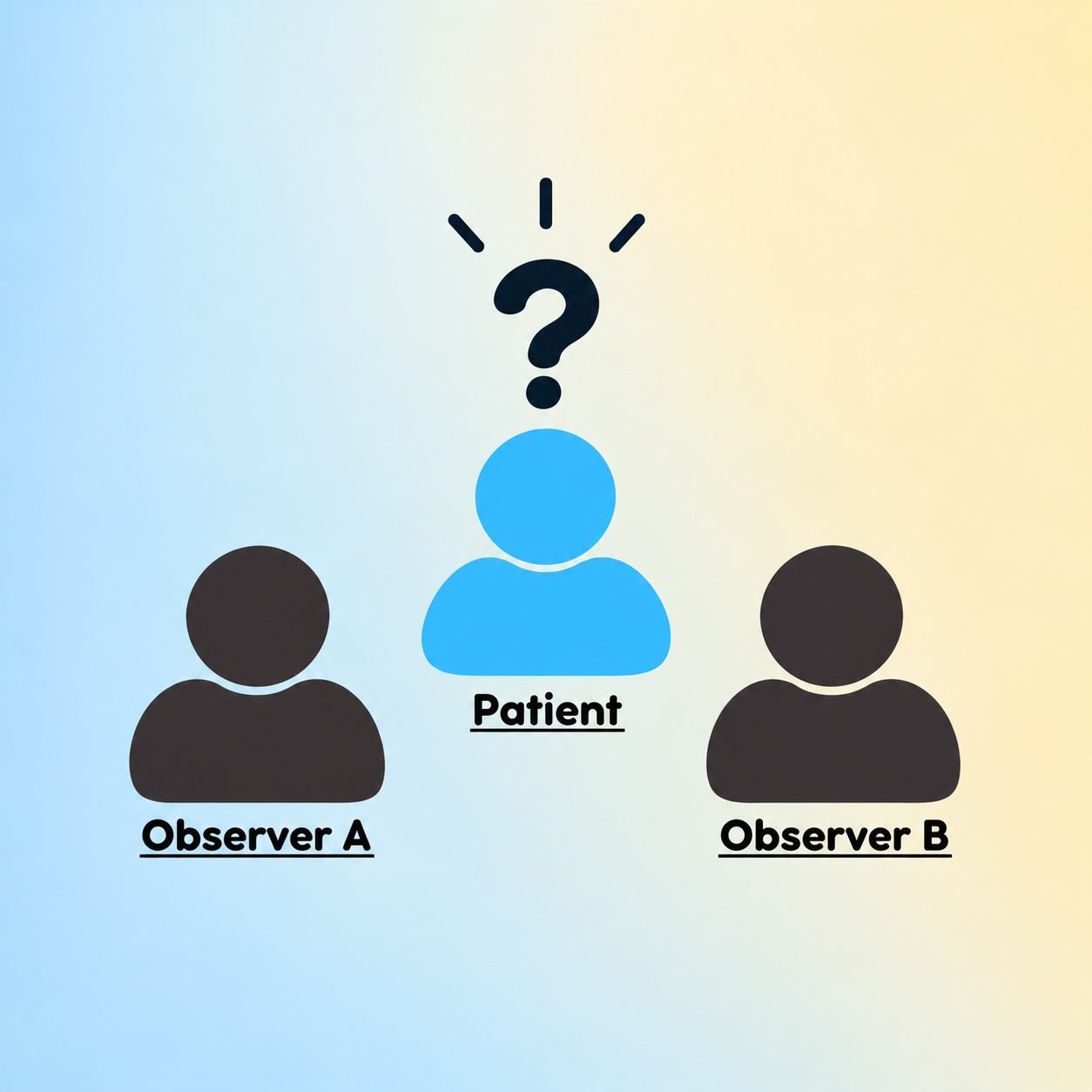
In this study, your child will read different stories about a sick patient asking for help to end their suffering from two observers. Participants will share their observations about the characters in the stories, helping us understand children's judgements of bioethical decisions.
Who should get the cookies?
In this study, your child will listen to short illustrated stories about two characters and their cookies, then help decide what should happen next! Help us learn how children think about fairness and responsibility.
Who Should We Invite to Our Playdate? For Children with Autism Spectrum Disorder
For children with an autism spectrum diagnosis (ASD)! In this study, your child will see friendly animal puppets who promise to show cool toys. Sometimes they keep their promises, sometimes they don't! We want to know: does the reason matter?
Do children understand the limits of knowledge?
Join us on Zoom to hear short stories and chat with a researcher! We are studying how children think about people who hold unusual or mistaken beliefs, especially when those beliefs come from having limited or different access to information.
How does practice make progress?
In this study, your child will watch two friends play a ring toss game together, answer questions, and help us understand how children think about learning from practice!
How do things work?
In this scheduled video chat with a researcher, your child will answer questions about what they know and explain how some everyday objects work. We will learn more about how children think about their own knowledge.
Bonding: A survey for parents
You will see statements about your child and your relationship with your child. You will rate how much you agree with each statement on a scale from "strongly disagree" to "strongly agree." We will learn how to improve ways of measuring how parents and children bond.
What will they do on the treasure hunt?
In this scheduled video call with a researcher, your child will listen to two stories about cartoon characters on a treasure hunt to help us understand how kids think about when and who to help.
Help E.T. Learn 'Earth Talk'!
In this study, your child will hear sentences like "Big Bird carries Cookie Monster" and see two side-by-side images (say, Big Bird carrying Cookie Monster and Cookie Monster carrying Big Bird). Your child's job is to click on the one that matches.
参考資料