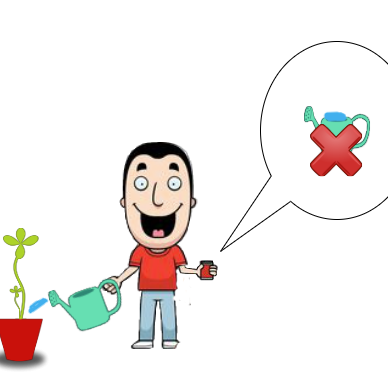
Whose fault was it? How could things have been different?
Language and Learning Lab (University of Toronto)
研究・調査への参加資格 |
For 6-8-year olds, who are fluent in English (either monolingual English speakers, or multilingual with regular (50% or more) exposure to English in their daily lives, counting both at home and at school) |
研究・調査の流れ |
This study will take place over a video call with a researcher. Clicking on the “Schedule a time to participate” button will send you to an online calendar where you can select a date and time that works for you. In this study, your child will be watching a series of short videos about a character who either follows a norm or does not. For instance, a character following a norm will carry out instructions properly when they are told to water a plant. A character not following a norm will not do so. Your child will be answering short questions related to each of the stories. Before the study session, you will receive an online consent form and brief demographic survey, which you will need to fill out before participation. |
現在の研究・調査 |
The purpose of this study is to help us better understand how children think about normality (e.g., following rules or instructions), and the way in which it interacts with reasoning over cause and effect, and reasoning over events which have not happened. We test whether children are more likely to blame characters following norms as opposed to characters who do not, and whether this carries over to 'counterfactual reasoning' (i.e., reasoning over non-actual states of affairs.) To do so, we present children with a series of stories involving characters either following a norm or not, and involving a negative outcome (e.g., a plant dying). We ask (1) which character was at fault in the story (testing whether they blame the character who did not follow a norm) and (2) what should have happened differently, so the outcome would not have occurred. |
期間 |
15 minutes |
謝礼 |
For families residing in Canada, you will receive a $5 gift card to Indigo after participation. For families residing in the United States, you will receive a $5 gift card to Amazon.com after participation. To be eligible for compensation, you must meet all of the following criteria: (1) Your child falls within the specified age range for this study, and meets the language requirements and (2) you provide recorded verbal consent. Each child is eligible to participate to receive a gift card only once; participants cannot do the study more than once for compensation. You will receive your gift card via email within 1-10 business days after participation. |
この研究・調査を実施している研究者/研究グループ Patricia Ganea (contact: ioana.grosu@utoronto.ca).