Learning About Physics with Real and Imagined Experiments
Computational Cognitive Development Lab (Harvard University)
研究・調査への参加資格 |
We are recruiting children who fall into two age groups: a younger group (6.5–7.5 years) and an older group (8.5–9.5 years). |
研究・調査の流れ |
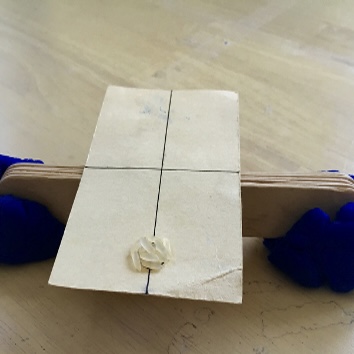
This study will take place during a live video call over Zoom with a researcher. Clicking the ‘Schedule a time to participate’ button will take you to an online calendar (Calendly), where you can select a date and time that works for you. During the session, your child will be asked a series of questions about the weight of different objects and how much space they take up. Your child will also take part in either a real or a thought experiment, in which they will learn about weight by making judgments about the weight of grains of rice placed on a simple balance scale. |
現在の研究・調査 |
We are interested in how real versus thought experiments (experiments carried out in the mind) transform children’s theories of matter, specifically their understanding of weight. Before children possess a scientific understanding of weight, many believe that a single grain of rice weighs nothing at all. We are testing whether children’s beliefs about the weight of very small objects, including rice, can be revised through either real or imagined experiments, in which they reason about weight under different learning conditions. This study will provide insights into how different types of experiments support conceptual change in early scientific reasoning. |
期間 |
30 minutes |
謝礼 |
You will receive a $10 Amazon.com gift card as a thank‑you for participating in this study. To be eligible for the gift card, your child must be within the age range for this study and must be visible in the study video. You must also submit a valid consent form. Each child may participate in the study, and receive a gift card, only once. We strive to send the gift cards immediately after the study is completed and no later than five days afterward. |
この研究・調査を実施している研究者/研究グループ Igor Bascandziev (contact: igb078@mail.harvard.edu).