To Help or Protect?
SoCal Lab (University of California, San Diego)
Who Can Participate |
5-6-year-old children |
What Happens |
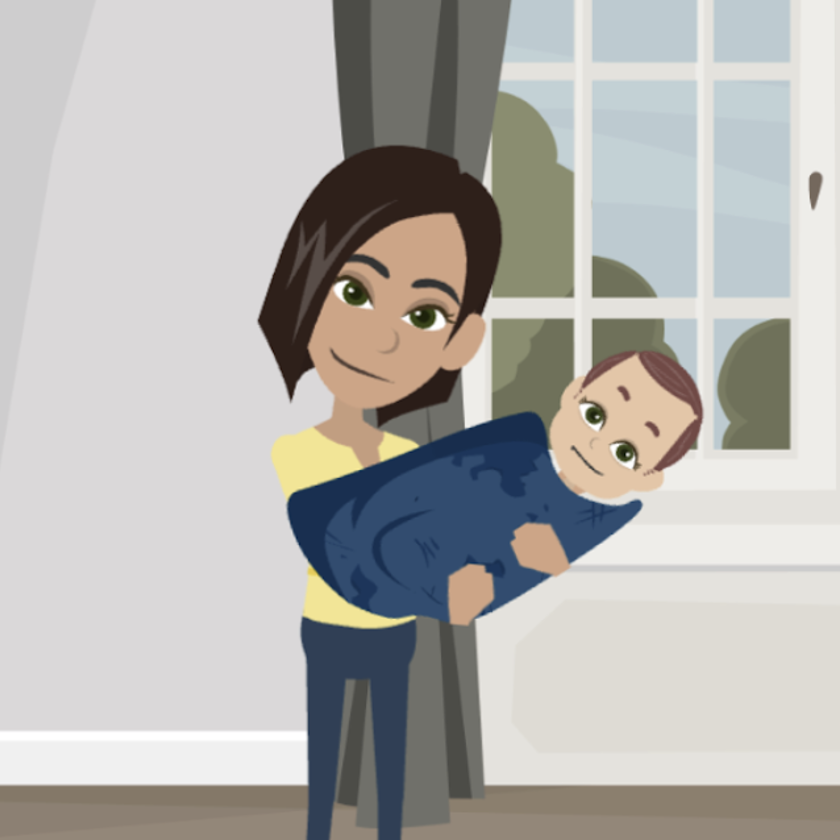
This study will take place on a Zoom video call with a researcher! Clicking on the “Schedule a time to participate” button will send you to an online calendar where you can select a date and time that works best for you. The present study tests if children expect parents and other partners to help or hinder an infant's goal of playing with a box of dangerous items. A researcher will read your child short stories about parents and non-parents. Your child will evaluate the non-parents' helpful, neutral, hindering actions, and predict what the parent vs. non-parent are going to. Our primary questions of interest are: Do children think parents will help their children play with things, regardless of whether the things are safe or dangerous? Do these expectations extend to other social partners, as well? |
What We're Studying |
From past research we know that even in infancy, humans prefer helpful over hindering individuals: They prefer those who help others achieve their goals and disfavor those who prevent others from achieving their goals. But not all goals are safe. For instance, sometimes naïve children want to play with things they do not yet know are dangerous. The present study aims to answer whether children’s expectations of caregiver helping and hinder is more nuanced. That is, do children think parents will always help their children, regardless of if a goal is safe or dangerous? Or, do they expect parents to only help their children in cases when it can maximize their welfare? Do these expectations extend only to parents, or to other social partners as well? This study will help us better understand how children reason about parents and other social partners, particularly their helpful and protective behaviors and obligations. |
Duration |
8 minutes |
Compensation |
Participants will receive a $5 Amazon.com gift card for completing the study. The gift card will be sent within 24 hours after the appointment is complete. Only one gift card per participant and the participant must be in the study age range in order to receive the gift card. |
This study is conducted by Lindsey Powell (contact: ljpowell@ucsd.edu).