Social reputation among different audiences
DIBS Lab (University of Chicago)
Who Can Participate |
For 6- to 12-year-olds |
What Happens |
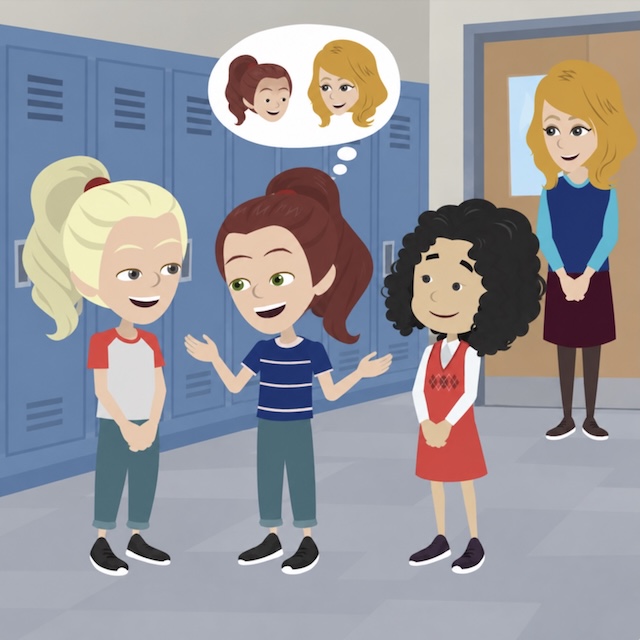
This study will take place on a video call, live with a researcher! Clicking on the “Schedule a time to participate” button will send you to an online calendar where you can select a date and time that works for you. During the scheduled Zoom session, a researcher will share their screen and tell several stories to your child. The stories involve children talking with classmates and teachers in familiar situations. For example, one story will involve characters asking questions and giving both academic and non-academic (e.g., vacation plans) responses. After each story, your child will be asked what they think about the characters, such as what they think the characters know, what kind of qualities they possess, or what a character might choose to do in a situation. |
What We're Studying |
Previous research suggests that children are sensitive to how they themselves and others are judged, and they come to understand that this evaluation can depend on who is there to see or listen. For example, something that makes a child seem friendly to a classmate might create a different impression on a teacher. Our lab's work shows that kids both act differently and evaluate others differently based on the social context: who is around to listen, how someone is spoken to, or how other people treat someone. In everyday life, children decide what to say, who to be friends with, and how to present themselves, and the best choice often depends on the audience: a peer, a teacher or parent, or maybe a stranger. In this study, we are interested in how children reason about the impressions people make and how those impressions might differ depending on the audience. To explore this, we use short stories about familiar social situations, such as children asking questions to peers and teachers, reporting how they spent their free time to different audiences, how they give feedback to others based on who is listening, and how they think about qualities that make certain children have different reputations (e.g., popularity). We then ask children to make predictions and judgments about the characters, including how their words and choices might be interpreted by different people. By examining children's responses across these situations, we hope to better understand how they take social context and different audiences into account when reasoning about other people's behavior and reputations. |
Duration |
15 minutes |
Compensation |
Each family will receive a prize of a $10 Amazon.com gift card per child that participates, sent via email within the week after you participate. Participants must be in the age range for this study, visible in the consent video, and have never participated in this study before. |
This study is conducted by Alex Shaw (contact: ashaw1@uchicago.edu).