How will they feel?
Early Childhood Cognition Lab (Massachusetts Institute of Technology (MIT))
Who Can Participate |
For English-speaking children 4 and 5 years of age |
What Happens |
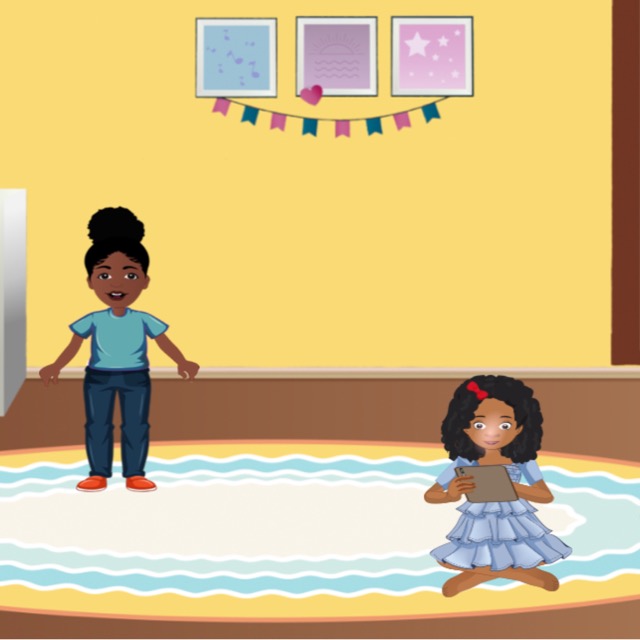
You and your child will see and hear stories with illustrations of real-life situations. In each story, a child will be trying to complete a task. Your child will be asked how the child in the story would feel if they were given help. Before seeing and hearing the stories, we will show your child how to use a simple scale ranging from very upset to happy. Your child will also be asked to answer some additional questions about the child protagonist in these stories. |
What We're Studying |
We're interested in whether children recognize that help may not always be beneficial, and that sometimes the act of helping might imply something negative about the person in need of help: specifically that they're less competent than the helper. Findings from this study will help us better understand if children recognize that sometimes helpful, well-intentioned actions can have negative implications. |
Duration |
15 minutes |
Compensation |
After you finish the study, we will email you a $5 Amazon.com gift card within seven days. To be eligible for the gift card, (1) your child must be in the age range for this study, (2) English is (one of) your child's first language(s), (3) you need to submit a valid consent statement, (4) we need to see that there is a child with you during the experiment, and (5) your child has not taken part in any of these closely related studies: "Who to Tell?", "Should they help?", or "Who should they tell?". If you or your child do not wish to complete the entire study or for some reason we are unable to use your child's data, we will still send you and your child a gift card. Each child is eligible to participate to receive a gift card only once. |
This study is conducted by Laura Schulz (contact: kmparece@mit.edu).