Development of Reading: Read about whales and dinosaurs!
Computational Psycholinguistics Lab (MIT)
Who Can Participate |
8 - 12 year olds who read English |
What Happens |
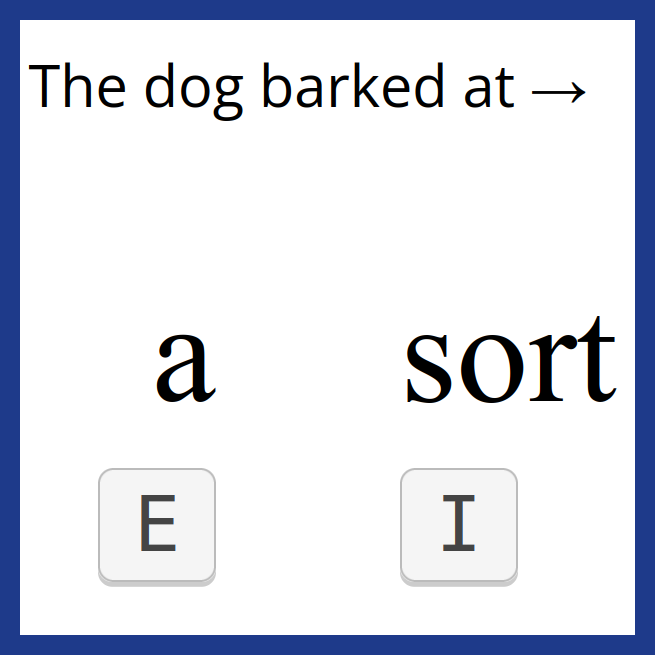
This study uses keyboard inputs, so please use a physical keyboard (not a touchscreen). In this study, your child will read some sentences where they have to pick which word (of two options) continues the sentence. We'll explain how this "funny way of reading" works with three warm-up sentences (6 words each), and then your child will read two non-fiction articles, one about whales and one about dinosaurs. Each article is about 300 words long (25 sentences), and there will be pictures of whales and dinosaurs mixed in. At the end, we'll have a survey where your child (and you) can give us feedback about the study. |
What We're Studying |
This study is about when words are harder or easier to read, and how that might change as kids grow up. Adults take longer to read words that are less common (like porcupine) or that don't fit the context (like barked in "The cat barked"). These patterns suggest that adults are building expectations about what the next word is as they read. We want to know if children are doing the same thing, and how this might change as they get older, so we're measuring how children's reading times vary based on how common or predictable words are. This is an early study, and the results will also help us design studies for children of different ages. |
Duration |
25 minutes |
Compensation |
After you participate, we'll email you a $5 US Amazon gift card within one week to thank you for your time. To be eligible for compensation, (1) your child must be in the age range for this study, (2) you need to submit a valid consent video, and (3) your child must be visible in the consent recording. Each child is eligible for compensation only once. |
This study is conducted by Veronica Boyce (contact: vboyce@mit.edu).