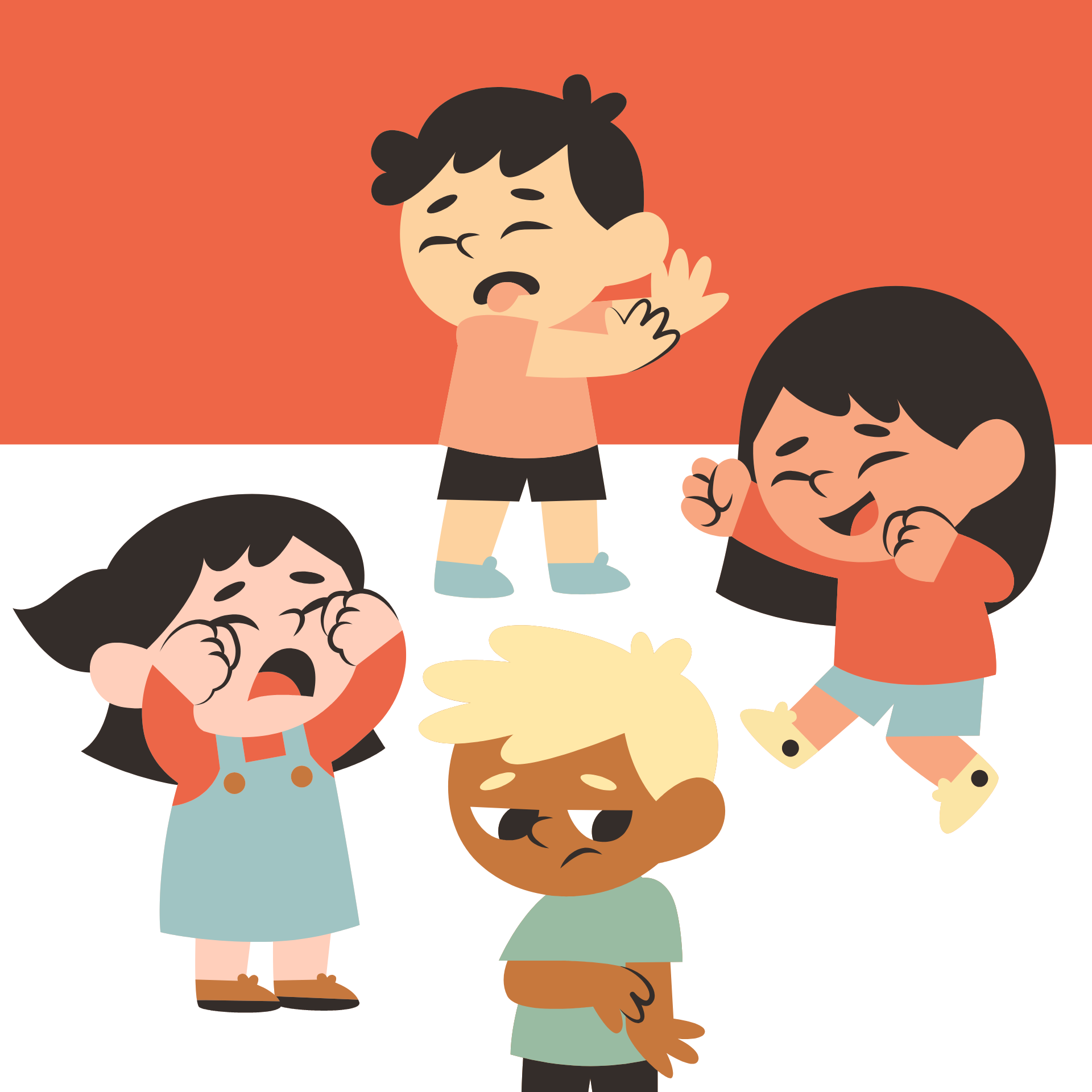
Storytime Feelings: How Children Learn Emotion Words
Little Lab (Smith College)
研究・調査への参加資格 |
Children ages 2.5–4 years who are monolingual English speakers. Because this study focuses on how children learn English emotion words, we are currently including children who primarily hear and speak English. This helps us make fair comparisons across children’s responses. |
研究・調査の流れ |
In this study, your child will learn emotion words through stories. The study has 3 parts. In the first part, we are testing whether your child knows the emotions we are interested in. They will listen to short, playful stories about everyday situations (for example, a child going to a new school for the first time, accidentally breaking a favorite cup, or watching a scary part of a movie). After each story, your child will see four faces and click on the one that shows how the character feels. In the next part, your child will watch short videos where the character’s feeling is labeled out loud. Some of the emotion words will be familiar (like “sad” or “afraid”), and some will be new, made-up words (like "blickety"). During this part, your child will click on the matching face and say the feeling word out loud. Finally, we test whether your child learned the emotion words during our study. Your child will again choose faces to show how characters feel. Short Sesame Street videos are shown between sections to keep the experience fun and engaging. Parents will also complete a brief survey about their child’s understanding of emotion words. By comparing how children respond before and after hearing and saying the emotion words, we hope to learn more about how children learn new emotion words and whether different social cues help support that learning. |
現在の研究・調査 |
Children learn emotion words like happy, sad, and scared early in life, but researchers are still learning how children figure out what these words mean. Previous studies have found that 3-to 4-year-old children are able to correctly identify emotional expressions when they’re also taught the English word for that expression, but not when they are taught a completely novel word. However, children in this prior study were taught emotions with a very neutral affect, which is often different than what they experience in everyday interactions. This study builds on this work by examining whether naturally expressive child-directed communication, which includes exploring social cues such as facial expressions and tone of voice, helps children connect emotion words to how characters feel in stories. Learning more about this process helps researchers better understand language development and how children learn other people’s emotions. |
期間 |
20 minutes |
謝礼 |
Within two weeks of participating, families will receive a $5 electronic Amazon.com gift card by email. Your child will also receive a participation certificate sent by email to thank them for helping with science! To be eligible for the gift card and certificate, you must complete the session with an age-appropriate child. Each child may receive a gift card only once for participating. Families are eligible to receive the gift card even if they do not finish the entire study or if their child’s data cannot be used. |
この研究・調査を実施している研究者/研究グループ Patrizia Picado (contact: ppicado@smith.edu).