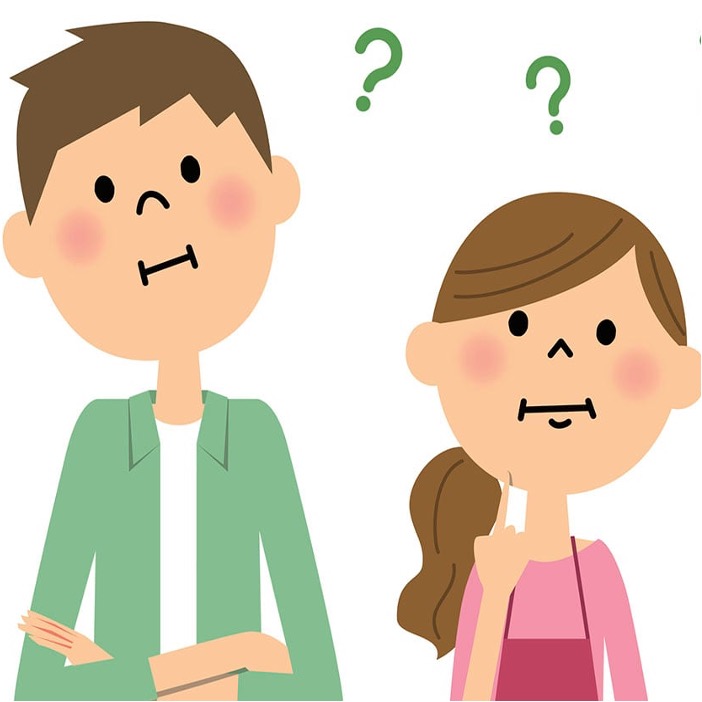
Teens' and Parents' Perspective Taking of Relationship Issues
NIU Cognitive Development Lab (Northern Illinois University)
Who Can Participate |
12- to 17-year-olds and their parent/guardian |
What Happens |
In this study, parents and teens each will fill out a demographic survey, answer 17 multiple-choice questions, and one free-response question. For instance, “Before doing their chores, your teen starts watching YouTube videos. They end up binge-watching videos and don’t do the chores when they were supposed to. How much do you think that it’s okay for your teen to watch videos when they should be doing chores? How much would your teen think that it’s okay for them (your teen) to watch videos when they should be doing chores?” and “Thinking about arguments with your teen over the last year, how much do you feel the arguments have affected your relationship with them?” Teens will complete their survey first while parents face away from the computer. Then parents will complete their survey; teens are also asked not to look at their parent's responses. We ask that you don’t look at each other’s responses or coordinate answers to the questions while the study is in progress. If teens have difficulty understanding questions, parents can assist in explaining but we ask that you do not tell your teen which answers or responses to select so we can assess perspective taking. After both surveys are submitted, parents and teens are welcome to discuss their responses and answers. |
What We're Studying |
We’re exploring teens’ and parents’ attitudes on and perspective-taking of teen behaviors with screen devices and everyday activities. Specifically, if teens and parents share similar attitudes, can accurately take each other’s perspectives, and their relationship disagreements affect perspective-taking due to thoughts, feelings, and expectations of the other. Teen years are all about finding yourself and making more friends, which can lead to conflicts with parents about how much freedom teens should have and how much control parents should have. These disagreements often revolve around everyday issues like chores, social activities, homework, sleep, and screen devices. Understanding teens’ and parents’ perspective-taking and disagreements on teen behavior is important to teenage development because parent-teen conflicts can help teens learn to understand others and solve problems, which are vital in adulthood. Plus, it’ll give us a better understanding of parent-adolescent relationships and technology conflicts. |
Durée |
25 minutes |
Compensation |
You’ll receive up to two $5 e-gift cards to Amazon, Starbucks, Target, or Walmart: one $5 e-gift card for the teen survey and one $5 e-gift cards for the parent survey. E-gift cards are sent within 10 business days (two weeks) if the survey and eligibility criteria are met (each parent-teen pair participate only once, parent and teen visible in the consent video, teen in age range, parent only participates in the Parent survey, teen only participates in the Teen survey). Email addresses will only be used for compensation purposes. |
Cette étude est menée par Stephanie Cleary (contact: scleary1@niu.edu).